Transportation Equipment on Rentam: What It Is, Who It Serves, and How to Access It
Transportation is a basic requirement of modern life. People and goods need to move—between homes and markets, farms and storage points, offices and project sites, cities and communities. Yet ownership of transportation equipment is often expensive, inefficient, or unnecessary for many use cases.
Rentam Rental Services approaches transportation not as a product to sell, but as infrastructure to access. The Transportation Equipment category on Rentam exists among the overall categories of Asset and Equipment rental to make movement possible without requiring permanent ownership of vehicles or mobility tools.
This article explains, in clear and practical terms, what transportation equipment means within the Rentam system, who uses it, how it is structured, and how first-time and experienced renters can access it across Nigeria and beyond.
What Transportation Equipment Means on Rentam
Transportation equipment refers to any movable asset designed to carry people, goods, tools, materials, or produce from one location to another. This includes Equipments powered by humans, engines, machinery, water, or air.
Our defining feature of transportation equipment is function, not size or value. A wheelbarrow and an aircraft both qualify as their purpose is movement , goods, tools, materials, or produce from one location to another
Transportation Equipment in the Rentam Context
Within Rentam, transportation equipment is treated as a use-based asset class. The focus is not ownership, but temporary access for a defined purpose and duration.
This approach reflects common real-world needs:
- A trader who needs a vehicle for market day
- A Farmer who needs to move produce during harvest
- A contractor who needs a truck for a project
- An individual who needs short-distance mobility
Rentam structures these needs into a system where transportation equipment can be rented Transporter when required and released when no longer needed.
Who Is a Transporter?
A transporter is any individual, business, or organization that operate transportation equipment to move people or goods. On Rentam, a transporter may be the renter, the operator, or both, depending on the rental arrangement.
The term is functional rather than occupational. A transporter does not need to run a transport business to qualify.
Types of Transporters Served on Rentam
Transporters on Rentam commonly include:
- Individuals handling personal errands or mobility needs
- Small business owners moving goods or supplies
- Traders transporting inventory to markets
- Logistics and delivery operators
- Farmers moving produce, tools, or inputs
- Contractors and project teams working on sites
- Event organizers handling setup and teardown
This broad definition allows transportation equipment to remain accessible across economic levels and use cases.
Purpose of Transportation Equipment
Transportation equipment exists to enable movement efficiently and temporarily. Its purpose within Rentam aligns with real conditions in Nigeria and similar markets, where access often matters more than ownership.
Key purposes include:
- Moving people between locations
- Transporting goods, materials, and tools
- Supporting trade, agriculture, construction, and services
- Handling short-term or seasonal transportation needs
For example, a farmer may only need a truck during harvest, or a trader may need a pickup only on specific market days. Rentam accommodates these patterns without forcing long-term commitments.
Categories of Transportation Equipment on Rentam
To maintain clarity and usability, transportation equipment on Rentam is organized by mode of operation and use environment. This categorization helps renters identify suitable equipment quickly.
Human-Powered Transportation Equipment
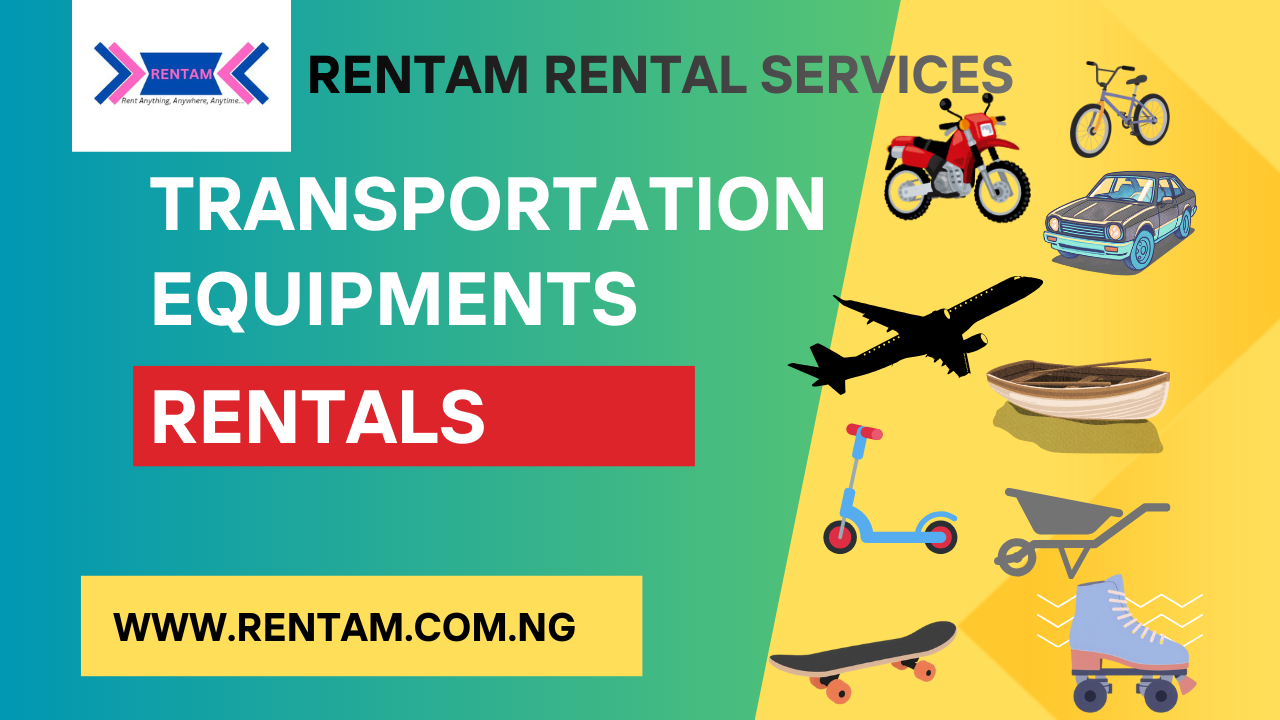
This category includes equipment operated primarily by physical effort. It is commonly used for short distances and light loads. Examples include
- Bicycles,
- Wheelbarrows
- Skates
- Skateboards
- Kick Scooters
- Trolleys/Carts
These tools are especially useful in urban neighborhoods, farms, markets, and campuses
Motorized Land Vehicles
Motorized land vehicles form the largest transportation segment on Rentam. They support personal movement, commercial transport, and logistics. This category includes but not limited to:
Usage ranges from personal travel to goods distribution and passenger transport.
Medical Transportation Equipment
Construction and Industrialization Transportation Equipment
Some transportation equipment is designed specifically for heavy or specialized work environments. Examples include
- Construction trucks
- Loaders
- Dump Trucks
- Trailers
- Tippers
- Forklift
These assets are typically rented for projects rather than everyday movement.
Agricultural Transportation Equipment
Agricultural transportation equipment supports farming and rural logistics. It includes
- Tractors
- Agricultural trucks
- Produce-handling vehicles.
These assets are commonly used seasonally and benefit greatly from rental access rather than ownership.
Water Transportation Equipment
In riverine and coastal areas, transportation extends beyond roads. This category includes
These Equipments are used for water transport, fishing support, and local logistics
Air Transportation Equipment
Air transportation equipment includes aircraft such as
These assets are typically accessed through specialized partners and are subject to regulatory and operational controls.
Availability of Transportation Equipments varies based on region, partners, and regulatory requirements, but the category structure remains consistent.
How Transportation Equipment Rental Works on Rentam
Transportation rentals on Rentam follow a structured, predictable process designed for clarity and accountability.
Listing and Availability
Transportation equipments are listed by Us officially, by external asset owners or our Partners Partners. Listings specify location, rental terms, and usage conditions.
If an item is unavailable in a specific area, We may source it through partners or procurement channels.
Rental Duration and Use
We may be short-term, daily, weekly, or project-based. The renter uses the equipment for the agreed purpose and duration, after which it is returned.
This flexibility supports both one-off needs and recurring operational requirements.
Verification and Documentation
Depending on the equipment type, renters may be required to provide identification, licenses, or agreements. This ensures safety, compliance, and asset protection.
Delivery, Pickup, and Access
Access methods may include:
- Self-pickup from a partner location
- Delivery arranged through partners
- Agent-assisted access via JummikPlus
All methods operate within the same Rentam rental framework.
Who Rentam Transportation Equipment Serves
The Transportation Equipment category is designed to serve:
- Individuals without permanent vehicles
- Small and medium businesses
- Logistics and delivery operators
- Farmers and cooperatives
- Construction and project teams
- Event organizers and temporary users
The system prioritizes use-based access, not ownership status.
How to Access Transportation Equipment on Rentam
Renting via the Rentam Website or App
Users can browse transportation listings and initiate rentals directly through the Rentam platform, where available.
Renting Through Rentam Partners
Rentam Partners operate physical shops, offices, or digital platforms that provide local access to transportation equipment.
Renting Through JummikPlus Agents
For users without digital access or who prefer assisted transactions, JummikPlus Agents facilitate rentals on behalf of users.
Transportation Equipment as Operational Infrastructure on Rentam
Transportation equipment is a core asset category within Rentam’s broader system. It connects other categories such as construction, agriculture, events, and logistics.
By organizing transportation assets into a shared access framework, we reduces idle capacity while expanding practical mobility.
Why You Should Rent Transportation Equipment from Rentam
Renting transportation equipment from Rentam is not just about access—it is about system-level advantages that traditional rentals and ownership models do not offer.
1. Multiple Payment Flexibility: Cash, Credit, and Barter
Unlike conventional rental platforms, Rentam supports:
- Cash rentals
- Credit-based arrangements
- Barter and alternative value exchange (where applicable)
This flexibility reflects real economic conditions and allows users to access transportation equipment even when cash flow is limited.
2. Nationwide Reach Across Nigeria
Rentam is structured for nationwide coverage.
Transportation equipment can be accessed across cities, towns, and communities through:
This reduces geographic exclusion common in traditional rental systems.
Three Clear Access Channels
Rentam offers three official ways to access transportation equipment:
- Rentam Website or App (coming soon) – for direct digital access
- Rentam Partners – for physical or local business access
- JummikPlus Agents – for assisted or offline access
This ensures inclusion for both digitally connected and offline users.
5. No Ownership Burden
Renting through Rentam removes:
- Maintenance costs
- Long-term depreciation
- Storage challenges
- Idle asset losses
You pay only for use, not for ownership inefficiencies.
5. Scalable for Individuals and Businesses
Whether you need transportation once, weekly, seasonally, or continuously, Rentam supports scalable rental arrangements without forcing asset purchases.
6. Integrated Asset Ecosystem
Transportation equipment on Rentam connects seamlessly with other categories such as:
- Construction
- Agriculture
- Events
- Logistics
This creates operational continuity across different economic activities.
Frequently Asked Questions
Do I need to own a vehicle to use transportation equipment on Rentam?
No. Rentam is designed specifically for temporary access without ownership.
Can businesses rent transportation equipment long-term?
Yes. Rentals can be structured for extended durations based on business needs.
Are operators included with rented equipment?
This depends on the listing and partner arrangement. Some rentals include operators, others do not.
What if transportation equipment is unavailable in my location?
Rentam may source the equipment through partners or procurement where feasible.
Is transportation equipment insured?
Insurance terms vary by asset type and partner. Details are provided during the rental process.
Conclusion: Transportation Access Without Ownership Pressure
Transportation Equipment on Rentam is structured as shared infrastructure, not a sales offering. It exists to support movement, productivity, and daily life by making transportation assets accessible when needed and released when not.
Whether for personal mobility, business operations, agriculture, construction, or logistics, Rentam provides a clear, structured way to access transportation equipment responsibly and temporarily.
To explore available transportation equipment, users can browse listings on Rentam, engage verified partners, or work through authorized agents based on their preferred access method.
Recent Rentals:


KnowledgeBase
- Benefits of Renting with Rentam: Equipments & Properties Rental in Nigeria Made Easy
- Business Equipment Rentals on Rentam: Your Complete Guide to Renting Business Equipment in Nigeria
- How to Rent Out Transportation Equipment in Jigawa State Whether You Own the Equipment or Not Through Rentam Rental Services
- How To Rent Transportation Equipment in Jigawa State Even If You Have No Money Through Rentam
 Technical Equipment Rentals on Rentam: Your Complete Guide to Renting Technical and Diagnostic Equipment in Nigeria
Leave a Reply